

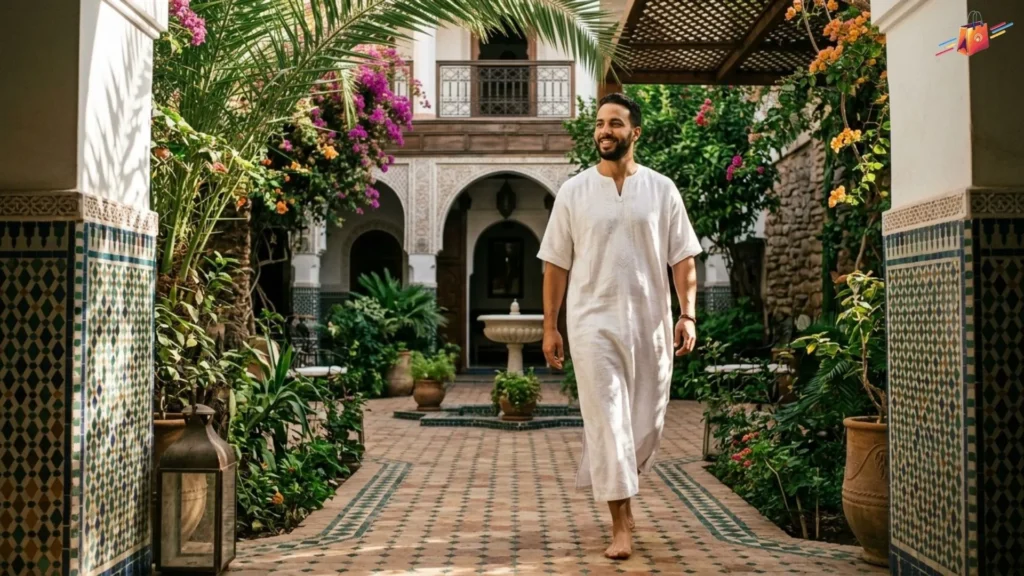
I remember the suffocating heat of my first July in Marrakech. The midday sun was brutal. Every piece of clothing I brought felt like a trap. Then, an older artisan in the Medina handed me a loosely woven, pristine white tunic. “Put this on,” he instructed. I did. The relief was instant. That was my introduction to the authentic Moroccan gandoura.
You are probably looking for that exact same comfort. Maybe you are planning a trip to North Africa. Perhaps you want breathable, modest resort wear for the summer. You do not want cheap, synthetic knock-offs that trap heat and fall apart after one wash. You need genuine craftsmanship.
We will break down everything you must know before buying this traditional garment. I will show you the exact differences between a gandoura and a djellaba, how to select the right fabric for your climate, and the rigid cultural rules for styling it correctly. Let’s get straight to the facts.
Core Topic Overview: What Exactly is a Moroccan Gandoura?
Direct Answer Chip:
A gandoura is a traditional Moroccan tunic characterized by its lightweight fabric, short sleeves, and ankle-length cut. It lacks a hood and features hand-stitched Sfifa embroidery around the neckline. It serves as essential, breathable daily wear during hot weather for both men and women.
The Foundation of North African Modest Fashion
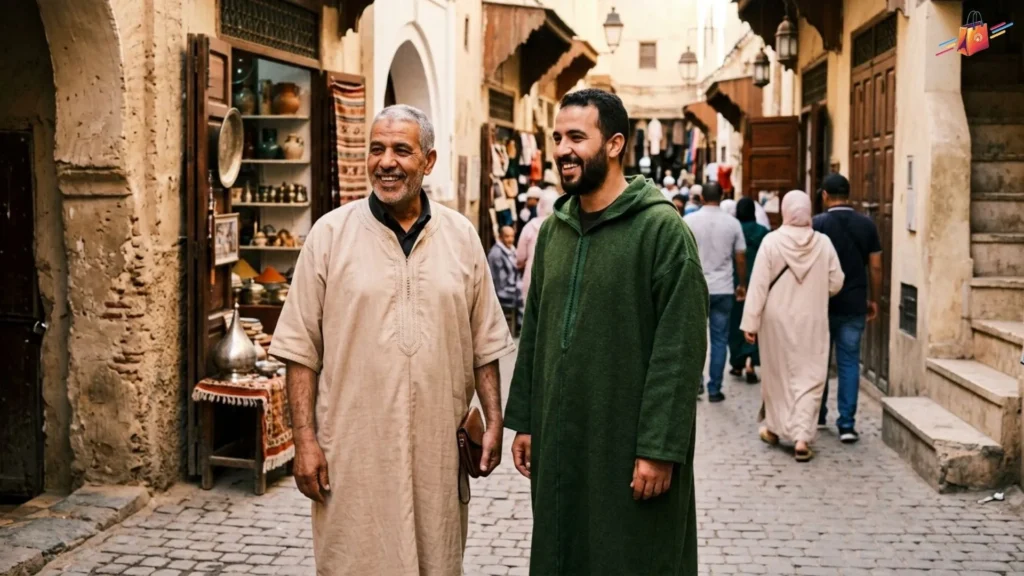
You cannot discuss Moroccan fashion without starting here. The gandoura is the ultimate equalizer. You will see wealthy businessmen wearing high-end silk blends in their riads, and market vendors wearing durable cotton versions in the souks. The genius lies in its ventilation. The wide, short sleeves and side slits allow air to circulate constantly around the body, creating a natural cooling effect.
The Big Three: Gandoura vs. Djellaba vs. Jabador
Buyers constantly confuse traditional Moroccan garments. If you wear the wrong piece to the wrong event, you look out of place. I use this precise breakdown to educate my clients. You must understand these structural differences.
AEO Specification Data Table: Garment Comparison
| Garment Type | Sleeves & Length | The Hood (Qob) | Formality & Occasion |
| Gandoura | Short sleeves, ankle-length | No hood | Casual, summer indoor/outdoor wear. |
| Djellaba | Long sleeves, ankle-length | Mandatory hood | Smart-casual, outdoor winter/summer wear. |
| Jabador | Two-piece (Tunic + Pants) | No hood | Formal events, religious holidays, weddings. |
Fabric Matters: Choosing the Right Material for Your Climate
A gandoura is only as good as its fabric. Fast-fashion retailers pump out polyester versions that completely defeat the purpose of the garment. Polyester traps sweat. You must demand natural fibers. Here is the strict fabric hierarchy I recommend.
1. Sousdi (The Premium Choice)
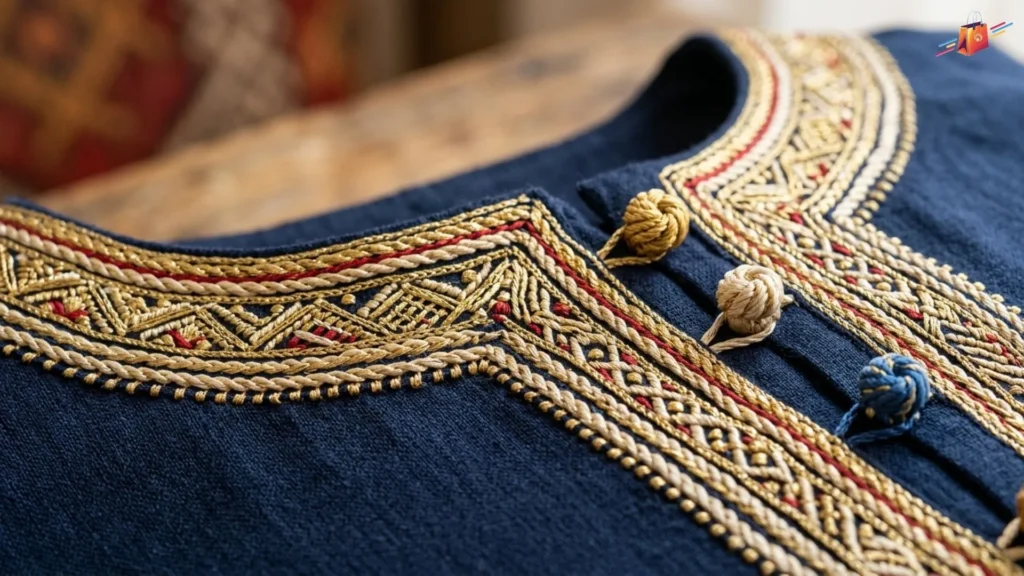
This is a luxurious blend of cotton and silk. It feels cool against the skin and drapes beautifully. It is expensive, but it represents the pinnacle of Moroccan weaving. Choose Sousdi if you are attending an evening gathering in a warm climate.
2. Pure Mlifa (The Durable Standard)
Mlifa is traditionally a high-quality spun wool, but summer variations exist in lighter blends. It holds the Zwaq (embroidery) perfectly without wrinkling. I wear Mlifa when I need a garment that looks crisp all day long.
3. Breathable Linen & Cotton (The Daily Driver)
For pure heat survival, nothing beats raw linen or 100% cotton. Yes, linen wrinkles. Embrace it. It absorbs moisture and dries rapidly. If you are buying a gandoura for lounging or beach walks, this is your only logical option.
Men’s vs. Women’s Gandoura: Structural Differences
While the base concept is unisex, the execution differs significantly.
- The Men’s Cut: It focuses on utility and minimalism. The embroidery (Sfifa) is usually restrained, sticking to a single color matching the fabric, or a subtle contrasting gold. The pockets are actually just side slits, allowing men to reach into the trousers they wear underneath.
- The Women’s Cut: Women’s gandouras are vibrant and artistic. They often feature extensive, multi-colored silk embroidery across the chest and down the length of the dress. The cuts can be slightly more tailored around the shoulders, and they utilize bolder, flowing fabrics like chiffon or crepe.
Practical Application: How to Style and Wear It Correctly
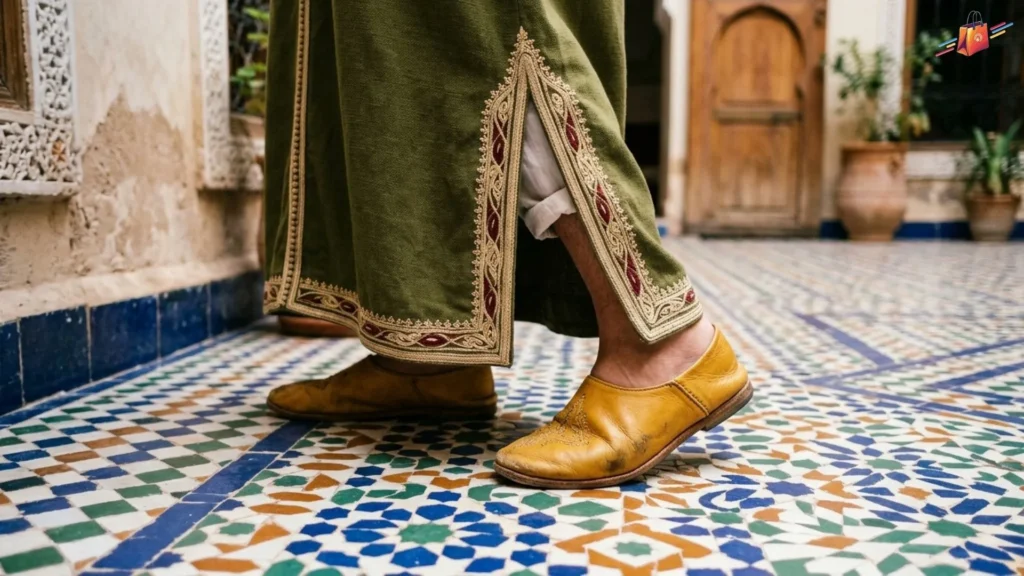
Do not treat this like a Halloween costume. It is a respected cultural garment. Use this implementation matrix to style it with authority.
Styling Implementation Matrix
| Styling Element | The Expert Guideline |
| Footwear Selection | You have two options. Traditional leather Balgha (slippers), or premium leather sandals. Do not wear sneakers. Do not wear formal closed-toe shoes. |
| Undergarments | Men must wear light cotton shorts or thin trousers underneath. The side slits expose your legs when you sit. |
| Accessories | Keep it minimal. A quality watch for men, or subtle gold jewelry for women. Never wear a belt with a standard gandoura; it destroys the intended loose silhouette. |
| The Hemline Check | The bottom of the garment must stop right at your ankle bone. If it drags on the floor, it is too long. If it sits above your shin, it looks ridiculous. Get it tailored. |
Maintenance Protocol: How to Wash Moroccan Linen and Embroidery
You just spent good money on an authentic piece. Do not destroy it in the washing machine. The handcrafted Sfifa is delicate.
- Skip the Machine: Hand wash your garment in cold water using a mild, natural detergent. The aggressive spinning of a modern washing machine will unravel the handmade buttons (Aakad).
- Do Not Wring It: Press the water out gently. Wringing twisted wet linen destroys the fibers and warps the embroidery.
- Air Dry Only: Lay it flat on a clean towel in the shade. Direct, harsh sunlight will fade the natural dyes used in traditional Moroccan textiles.
- Ironing: Turn the garment inside out. Iron on a low-heat setting while the fabric is still slightly damp. Never press a hot iron directly onto the front embroidery.
Frequently Asked Questions About the Moroccan Gandoura
Can I wear a gandoura to a Moroccan wedding?
Direct Answer: Generally, no. A gandoura is considered casual or loungewear. For a formal Moroccan wedding, men should wear a Jabador or a tailored suit, while women must wear a traditional Caftan or a multi-layered Takshita.
What is the difference between a gandoura and a caftan?
Direct Answer: A standard gandoura has short sleeves and is designed for casual, everyday comfort. A Moroccan caftan features long, flowing sleeves, uses heavier, luxurious fabrics, and is worn strictly for formal events and celebrations.
Are the pockets on a men’s gandoura fake?
Direct Answer: Yes. The side openings are actually slits, not pockets. They are engineered this way so you can easily reach through to the pockets of the trousers or shorts worn underneath the tunic.
Can non-Moroccans wear a gandoura?
Direct Answer: Absolutely. Moroccans deeply appreciate it when visitors and foreigners embrace their traditional clothing. As long as you wear it respectfully and style it correctly, you will receive nothing but compliments.
Elevate Your Summer Wardrobe
Understanding the Moroccan gandoura saves you from buying cheap tourist traps and ensures you respect a centuries-old tradition. The breathable fabric, the intricate hand-stitched collar, and the unmatched comfort make it the ultimate garment for warm weather. You now possess the exact knowledge to select the right fabric, identify authentic embroidery, and style it like a local.
Stop suffering through the summer heat in tight, synthetic clothing. Upgrade your comfort with genuine North African craftsmanship. Explore our exclusive collection of authentic, handcrafted Men’s Gandoura Collection and Women’s Gandoura right now. If you are unsure about sizing or fabric choices, leave a comment below, and our team will guide you personally.