

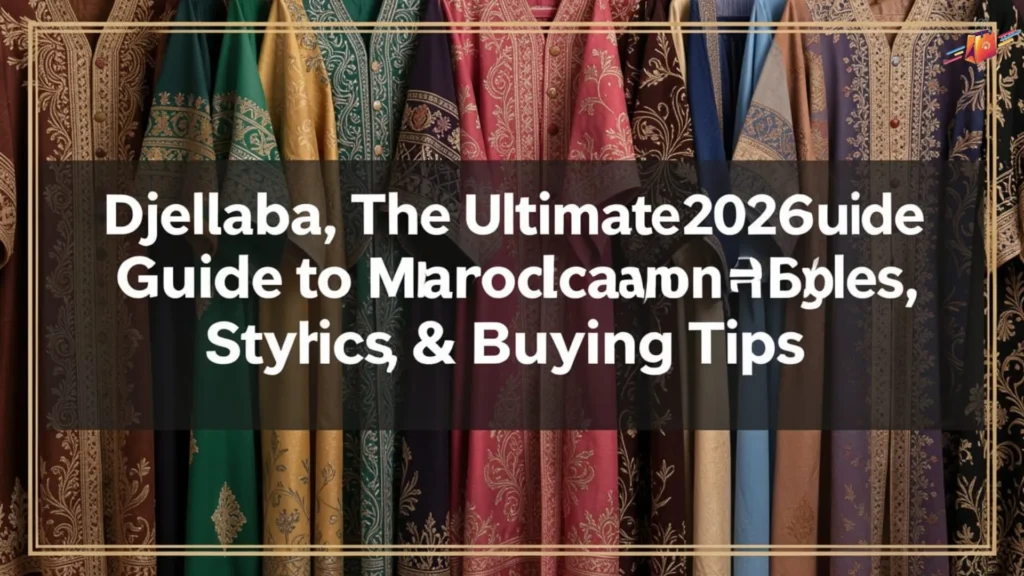
2. What Is a Djellaba?
Direct Answer Chip: A djellaba is a traditional North African robe characterized by its long, loose silhouette and
2.1 What Does a Djellaba Look Like?
Explain the core characteristics:
- Long robe
- Loose silhouette
- Long sleeves
- Hood
- Front opening or pull-over construction depending on style
- Traditional and contemporary variations
2.2 Where Did the Djellaba Come From?
Discuss its broader North African context without presenting uncertain historical claims as fact.
Cover:
- Morocco
- Maghreb
- Traditional clothing
- Regional variations
- Evolution over time
2.3 Wh
Discuss:
- Everyday wear
- Family gatherings
- Religious occasions
- Ramadan
- Eid
- Weddings
- Winter clothing
- Cultural identity
3. Moroccan Djellaba: Traditional Clothing With Modern Style
Direct Answer Chip: A Moroccan djellaba combines tradi
3.1 Traditional Moroccan Djellaba
Cover:
- Classic silhouette
- Hood
- Hand finishing
- Traditional fabrics
- Embroidery
- Regional influences
3.2 Modern Djellaba Designs
Discuss how designers adapt the garment through:
- Slimmer silhouettes
- Modern colors
- Minimal embroidery
- Lightweight fabrics
- Decorative trims
- Contemporary cuts
3.3 Djellabas for Men and Women
Create a comparison table:
| Feature | Men’s Djellaba | Women’s Djellaba |
|---|---|---|
| Silhouette | Usually relaxed | Relaxed or more shaped |
| Colors | Neutrals and traditional tones | Broad color range |
| Decoration | Often | May include embroidery |
| Fabrics | Wool, cotton, blends | Cotton, wool, silk-like blends, etc. |
| Occasions | Everyday/formal | Everyday/formal |
Avoid implying that these distinctions are universal.
4. Djellaba Robe: How Does It Differ From Other Moroccan Clothing?
Direct Answer Chip: The djellaba is distinguished primarily by its long robe shape and hood. It differs from garments such as the caftan and takchita, which are generally associated more strongly with ceremonial and occasion wear and often feature different cons
4.1 Djellaba vs Moroccan Caftan
4.2 Djellaba vs Takchita
4.3 Djellaba vs Gandoura
4.4 Djellaba vs Abaya
Use a comparison table:
| Garment | Hood | Typical Use | General Silhouette |
|---|---|---|---|
| Djellaba | Yes | Everyday/formal | Long and loose |
| Caft | Usually no | Formal occasions | Long and decorative |
| Takchita | Usually no | Weddings/celebrations | Layered |
| Gandoura | Usually no | Casual/traditional | Loose |
| Abaya | Usually no | Modest fashion | Long and flowing |
5. What Fabrics Are Used to Make a Djellaba?
Direct Answer Chip: Djellabas can be made from different fabrics depending on climate, season, purpose, and budget. Wool and heavier textiles suit cold weather, while cotton and lighter fabrics are more comfortable in warmer conditions. Fabric weight, weave, lining, and construction matter as much as fiber content.
5.1 Wool Djellaba
Best for:
- Winter
- Cold ev
- Mountain regions
- Warmth
5.2 Cotton Djellaba
Best for:
- Everyday wear
- Transitional seasons
- Breathability
- Easy care
5.3 Lightweight Djellaba Fabrics
Discuss:
- Summer-friendly materials
- Breathability
- Draping
- Moisture management
5.4 How Fabric Quality Affects Price
Explain:
- Fiber quality
- Weight
- Weaving
- Finishing
- Embroidery
- Hand craftsmanship
- Construction
6. Moroccan Winter Djellaba: What Should You Look For?
Direct Answer Chip: A Moroccan winter djellaba should prioritize warmth, fabric density, comfortable layering, and durable construction. Wool and heavier fabrics are practical choices for cold weather. Before buying, check the fabric weight, hood construction, seams, sleeve length, and whether you can comfortably layer clothing underneath.
6.1 Moroccan Winter Djellaba Cheap: Is Cheap Always Better?
Address commercial search intent carefully.
Explain the difference between:
- Low price
- Good value
- Handmade quality
- Factory production
- Fabric quality
- Long-term durability
6.2 Winter Djellaba Cheap Buying Checklist
Use a numbered list:
- Check fabric composition.
- Inspect seams.
- Check hood construction.
- Examine embroidery.
- Confirm measurements.
- Ask about washing instructions.
- Compare total delivered cost.
- Review return conditions.
6.3 Best Winter Djellaba Features
Table:
| Feature | Why It Matters |
|---|---|
| Dense fabric | Better warmth |
| Quality stitching | Durability |
| Comfortable hood | Better fit |
| Proper sleeve length | Comfort |
| Roomy body | Easier layering |
| Strong finishing | Longer life |
7. Djellaba Morocco: Regional Style and Craftsmanship
7.1 Where Are Moroccan Djellabas Made?
Discuss Morocco’s textile and artisan traditions without claiming every djellaba comes from one specific city.
Potential geographic context:
- Fez
- Marrakech
- Casablanca
- Rabat
- Northern Morocco
- Rural artisan communities
7.2 Handmade vs Machine-Made Djellabas
| Characteristic | Handmade | Machine-Made |
|---|---|---|
| Production | Artisan-led | Industrial |
| Finishing | Often individualized | More standardized |
| Price | Usually higher | Often lower |
| Consistency | Can vary | More consistent |
| Craft value | High | Variable |
7.3 How to Recognize Craftsmanship
Look at:
- Stitch consiste
- Embroidery
- Seam finishing
- Hood construction
- Fabric quality
- Decorative details
8. Djellaba Embroidery and Decorative Details
8.1 What Makes Moroccan Djellaba Decoration Special?
Discuss:
- Hand embroidery
- Trims
- Decorative stitching
- Buttons
- Braiding
- Neckline and hood details
8.2 Minimalist vs Highly Decorated Djellabas
Explain which may suit:
- Daily wear
- Office environments
- Ramadan
- Eid
- Weddings
- Gifts
9. How Do You Choose the Right Djellaba Size?
Direct Answer Chip: The right djellaba should provide comfortable movement without looking excessively oversized. Measure your chest, shoulders, sleeve length, and preferred garment length, then compare those measurements with the seller’s size chart rather than relying only on S, M, L, or XL labels.
9.1 Measurements to Take
- Chest
- Shoulder width
- Sleeve length
- Total length
- Waist/hip where relevant
9.2 Why Online Djellaba Sizes Can Differ
Explain:
- Different manufacturers
- Traditional loose cuts
- International sizing
- Handmade variations
9.3 Oversized vs Fitted Djellaba
Discuss comfort and styling rather than presenting one as universally correct.
10. How Should You Style a Djellaba?
10.1 Everyday Styling
Suggestions:
- Simple footwear
- Minimal accessories
- Neutral colors
10.2 Winter Styling
Layer with:
- Undershirt
- Sweater
- Warm trousers
- Boots
10.3 Formal Styling
Consider:
- Embroidered djellaba
- Refined footwear
- Coordinated accessories
- More structured finishing
10.4 Men’s Djellaba Styling
10.5 Women’s Djellaba Styling
11. When Do Moroccans Wear Djellabas?
Cover different contexts:
- Everyday errands
- Friday
- Ramadan
- Eid
- Family gatherings
- Religious occasions
- Weddings
- Cold weather
- Cultural celebrations
Emphasize that clothing practices vary by individual, region, generation, and occasion.
12. How Much Does a Djellaba Cost?
Direct Answer Chip: Djellaba prices vary widely according to fabric, construction, decoration, whether the garment is handmade, and where you buy it. A basic machine-made garment can cost considerably less than a hand-finished Moroccan djellaba using premium fabric and detailed craftsmanship.
Pricing Framework
Instead of unsupported fixed pric
| Price Level | Typical Characteristics |
|---|---|
| Budget | Basic fabric, simpler construction |
| Mid-range | Better fabric and finishing |
| Premium | High-quality textiles and decoration |
| Artisan | Handmade or extensively hand-finished |
What Determines Price?
- Fabric
- Labor
- Embroidery
- Customization
- Brand
- Location
- Shipping
- Import duties
13. How to Buy an Authentic Moroccan Djellaba
Direct Answer Chip: To buy an authentic Moroccan djellaba, evaluate the garment rather than relying only on the word “Moroccan” in a product listing. Check materials, construction, measurements, craftsmanship
Buying Checklist
- Identify the intended use.
- Select the season.
- Choose fabric.
- Check measurements.
- Examine construction.
- Ask whether decoration is handmade.
- Review product photographs.
- Check shipping costs.
- Read return policies.
- Compare overall value.
14. Common Djellaba Buying Mistakes
Mistake 1: Choosing Only by Price
Mistake 2: Ignoring Measurements
Mistake 3: Buying Heavy Fabric for Hot Weather
Mistake 4: Assuming “Handmade” Means Perfect
Mistake 5: Ignoring Care Instructions
Mistake 6: Forgetting Shipping and Import Costs
Mistake 7: Choosing a Style That Doesn’t Match the Intended Occasion
15. How
Direct Answer Chip: Djellaba care depends on its fabric, decoration, lining, and construction. Always follow the garment’s care label first. Some wool or embellished pieces may require specialist cleaning, while suitable cotton garments may tolerate gentler home washing.
15.1 Washing
- Check the label.
- Avoid unnecessarily aggressive washing.
- Use appropriate detergent.
- Protect embroidery.
15.2 Drying
- Avoid excessive heat when inappropriate.
- Shape the garment while damp if permitted.
- Store only after fully drying.
15.3 Storage
- Use suitable hangers.
- Keep embellished pieces protected.
- Avoid prolonged dampness.
16. Djellaba as a Cultural and Fashion Statement
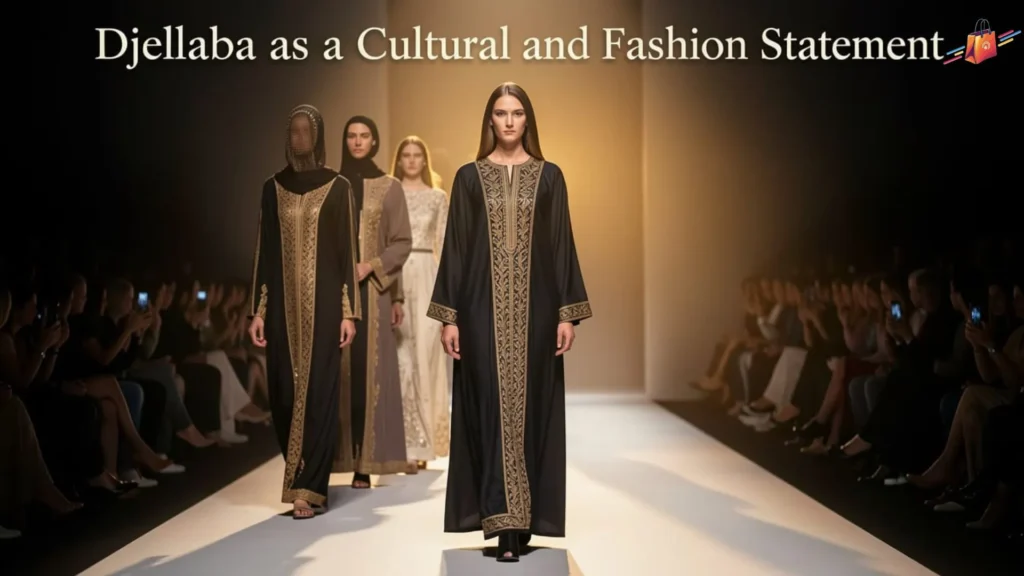
Discuss how the garment represents more than clothing.
Key concepts:
- Heritage
- Identity
- Craftsmanship
- Comfort
- Moroccan visual culture
- Generational change
- Contemporary fashion
This section is particularly valuable for GEO/AIEO, because it provides cultural context rather than simply repeating product descriptions.
17. Djellaba Buying Decision Matrix
Create an AI-friendly decision table:
| Your Need | Recommended Direction |
|---|---|
| Cold winter | Heavy wool or dense fabric |
| Warm weather | Lightweight breathable fabric |
| Everyday wear | Simple durable construction |
| Formal occasion | Refined fabric and decoration |
| Budget purchase | Prioritize construction over decoration |
| Gift | Neutral styling and accurate measurements |
| Handmade collector piece | Artisan craftsmanship and detailed finishing |
| Online purchase | Detailed measurements and return policy |
18. Voice Search & AI-Optimized FAQ
What is a djellaba?
Answer: A djellaba is a traditional North African hooded robe, strongly associated with Morocco. It is worn in different forms by men and women and can be made from lightweight or heavy fabrics depending on season, region, personal preference, and occasion.
Is a Moroccan djellaba only worn in winter?
Answer: No. Moroccan djellabas are made for different seasons. Heavy wool versions provide warmth in winter, while lighter cotton and other breathable fabrics can be suitable for warmer weather.
Where can I buy a Moroccan djellaba?
Answer: You can buy Moroccan djellabas from Moroccan artisan markets, specialist clothing retailers, traditional souks, and online stores. When shopping online, compare measurements, materials, construction, seller information, shipping costs, and return policies.
Are cheap winter djellabas good quality?
Answer: A cheap winter djellaba can offer good value, but price alone does not determine quality. Check fabric density, stitching, hood construction, finishing, measurements, and care requirements before deciding whether a low-priced garment is worthwhile.
What is the difference between a djellaba and a Moroccan caftan?
Answer: A djellaba is typically a long hooded robe designed for practical and traditional wear, while a Moroccan caftan is generally associated more strongly with formal and ceremonial fashion. Their construction, decoration, and typical occasions can differ considerably.
19. Expert E-E-A-T Framework
For the finished article, establish trust through four layers.
Experience
Discuss practical considerations such as:
- Wearing comfort
- Fabric feel
- Layering
- Sizing
- Washing
- Everyday use
Avoid inventing personal experiences that did not occur.
Expertise
Explain:
- Textile characteristics
- Garment construction
- Moroccan clothing terminology
- Fit
- Craftsmanship
- Buying methodology
Authoritativeness
Potential source categories:
- Moroccan government and tourism resources
- Cultural institutions
- Museums
- Academic publications
- Textile organizations
- Reputable Moroccan artisan organizations
Trustworthiness
- Distinguish verified facts from opinion.
- Avoid unsupported price claims.
- Don’t label a garment “authentic” without evidence.
- Clearly identify sponsored/commercial relationships where applicable.
- Update information periodically.
20. Recommended Internal-Link Cluster
To build topical authority around djellaba, connect this guide to related content such as:
- Moroccan caftan guide
- Moroccan takchita guide
- Moroccan traditional clothing
- Moroccan fashion for women
- Moroccan fashion for men
- Moroccan wedding clothing
- Moroccan fabrics and textiles
- Moroccan embroidery
- How to buy Moroccan clothing online
- Moroccan clothing size guide
- How to care for traditional Moroccan clothing
This creates a strong topic cluster rather than treating the djellaba article as an isolated page.
21. Final Conclusion & CTA
End with a human-centered takeaway rather than a generic SEO conclusion.
The central message should be:
A good djellaba is not simply a long robe. It is a combination of comfort, fabric, craftsmanship, cultural heritage, and personal style.
Encourage readers to:
- Compare fabrics.
- Check measurements.
- Consider the season.
- Look closely at craftsmanship.
- Choose according to occasion.
- Buy based on value rather than price alone.
CTA
Looking for your own Moroccan djellaba? Start with the fabric, fit, and occasion—not just the photograph. Compare your options carefully, choose a style you’ll genuinely wear, and share your favorite djellaba style or Moroccan clothing tradition in the comments.