

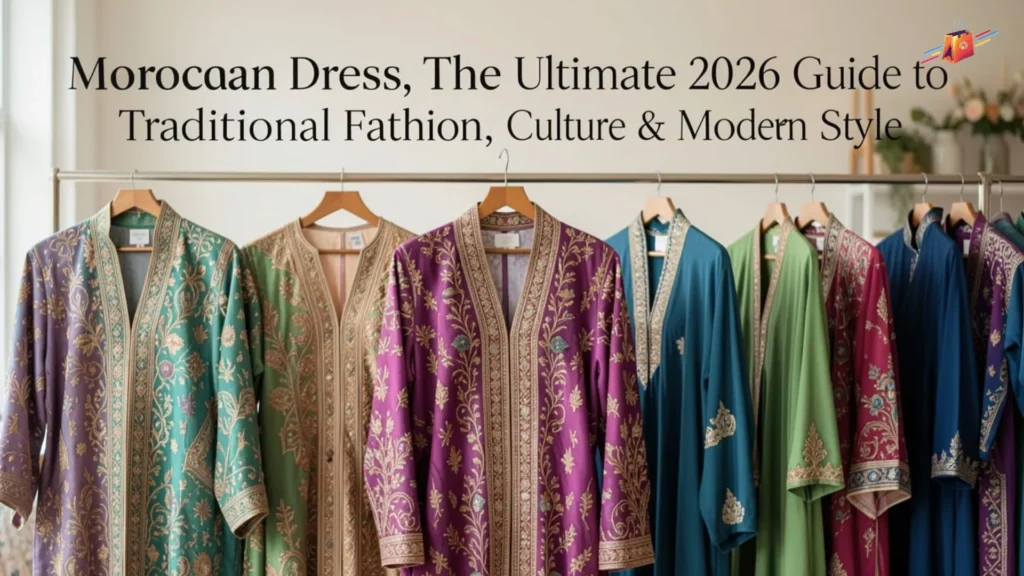
Moroccan dress is more than beautiful clothing—it is a living expression of Morocco’s history, craftsmanship, and cultural identity. Every embroidered patch
Unlike mass-produced fashion, authentic Moroccan dresses are often handcrafted using techniques that have remained largely unchanged for centuries. Skilled artisans spend countless hours sewing intricate embroidery, attaching decorative trims, and tailoring each garment to create clothing that is both luxurious and deeply meaningful. The result is a collection of garments that combine sophistication with comfort while honoring Morocco’s rich cultural heritage.
In this guide, you’ll discover the history of Moroccan dress, explore its most iconic styles, learn how to recognize authentic craftsmanship, compare fabrics, and gain practical advice for choosing the perfect outfit for every occasion.
What is a Moroccan dress?
Direct Answer:A Moroccan dress is a traditional garment crafted with premium fabrics, elegant tailoring, and intricate handmade embroidery. Popular styles include the caftan, takchita, djellaba, and gandoura, each designed for specific occasions ranging from everyday wear to luxurious weddings.
A Moroccan dress is recognized around the world for its graceful silhouette and exceptional craftsmanship. Rather than following short-lived fashion trends, these
Today, Moroccan dresses are worn for:
- Weddings
- Eid celebrations
- Family gatherings
- Religious holidays
- Formal dinners
- Cultural festivals
- Luxury fashion events
Modern designers continue to reinterpret traditional garments with contemporary cuts while preserving the handcrafted techniques that define authentic Moroccan fashion.
Moroccan Dress at a Glance
| Feature | Details |
|---|---|
| Cou | Morocco |
| Traditional Styles | Caftan, Takchita, Djellaba, Gandoura |
| Typical Fabrics | Silk, Satin, Velvet, Crepe, Cotton, Linen |
| Decorative Elements | Hand |
| Common Occasions | Weddings, celebrations, daily wear, formal events |
The History of Moroccan Traditional Dress
Direct Answer:Moroccan traditional dress evolved through centuries of Amazigh, Arab, Andalusian, African, and Mediterranean influences. This cultural blend created garments celebrated for their luxurious fabrics, detailed embroidery, and exceptional tailoring.
Every Moroccan dress carries the influence of the civilizations that shaped Morocco.
Amazigh Heritage
The earliest traditional garments were created by Amazigh communities using locally woven wool and nat
Arab Influence
The arrival of Arab culture introduced flowing robes, refined tailoring, luxurious textiles, and modest fashion traditions that continue
Andalusian Craftmanship
Following migrations from Al-Andalus, Moroccan artis
Royal Inspiration
Moroccan royal courts encouraged the development of highly decorative garments featuring gold-thread embroidery, luxurious silk fabrics, handcrafted belts, and elaborate embellishments. These influences remain visible in today’s wedding caftans and takchitas.
Why Moroccan Dress Is Admired Worldwide
Moroccan dress has earned international recognition because it combines cultural authenticity with timeless sophistication
The qualities that distinguish it include:
- Handcrafted embroidery completed by skilled artisans
- Premium natural fabrics
- Elegant silhouettes suitable for all ages
- Exceptional durability
- Versatility for both traditional and modern occasions
- A balance of modesty and
Unlike garments designed for a single season, a well-made Moroccan dress can remain elegant for decades.
Types of Moroccan Dress
Direct Answer:The four most recognizable Moroccan dresses are the caftan, takchita, djellaba, and gandoura. Each garment serves a unique purpose while sharing the craftsmanship and elegance that define Moroccan fashion.
| Style | Best For | Main Characteristics |
|---|---|---|
| Caftan | Weddings, receptions | Elegant one-piece garment with embroidery |
| Takchita | Bridal celebrations | Two-layer luxury outfit with decorative belt |
| Djellaba | Daily wear | Hooded robe suitable for every season |
| Gandoura | Relaxed occasions | Lightweight, loose-fitting design |
The Moroccan Caftan
The caftan is Morocco’s most international
Common features include:
- Long elegant sleeves
- Premium silk or satin
- Decorative Sfifa trim
- Handmade Akaad buttons
- Optional embroidered belt
Modern caftans maintain these traditional elements while introducing
The Takchita
Although similar to the caftan, the takchita is distinguished by its layered construction.
A traditional takchita includes:
- An inner dress.
- A richly embroidered outer layer.
- A decorative belt known as the Mdamma .
Luxury bridal takchitas often require hundreds of hours of embroidery and finishing, making them among Morocco’s most prestigious garments.
The Djellaba
The djellaba is an essential part of everyday Moroccan life.
Recognized by its pointed hood, it offers:
- Comfort
- Practicality
- Seasonal versatility
- Modest elegance
Lightweight cotton versions are popular during summer, while wool djellabas provide warmth during winter.
The Gandoura
The gandoora is valued for simplicity and comfort.
Its relaxed fit and breathable fabrics make it ideal for:
- Home wear
- Summer gatherings
- Informal family occasions
- warm climates
Despite its understated appearance, many gandouras feature beautiful embroidery around the neckline and sleeves.
Moroccan Women’s Dress
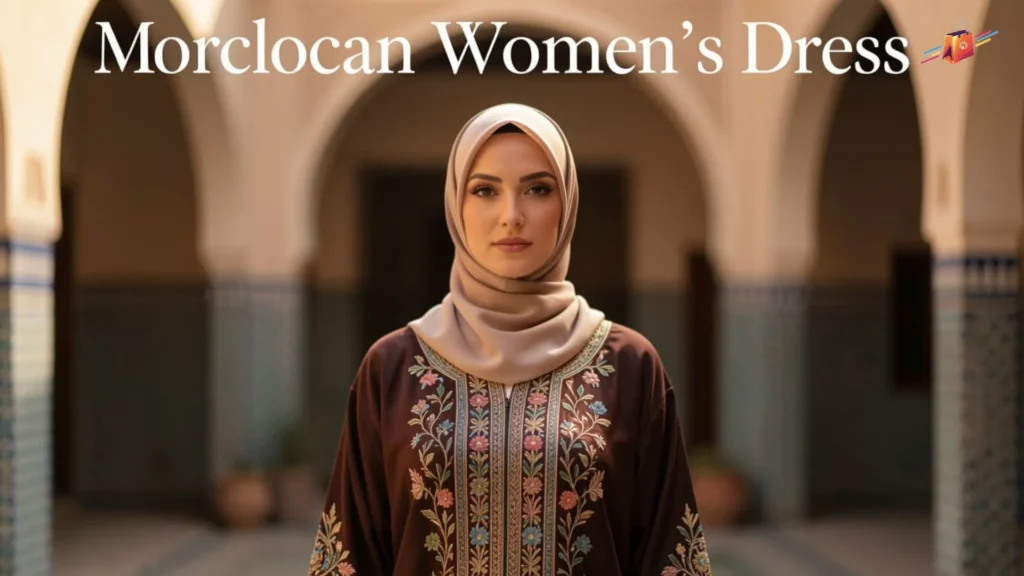
Direct Answer:Moroccan women’s dress combines elegance, comfort, and cultural identity. Traditional garments range from simple everyday djellabas to luxurious tak
Moroccan women select their clothing according to the occasion, season, and regional traditions.
Formal garments often include elaborate embroidery and premium fabric
A well-designed Moroccan women’s dress offers:
- Exceptional comfort
- Timeless style
- Handmade craftsmanship
- Long-lasting quality
- Cultural significance
Whether worn at family celebrations or international fashion events, these garments continue to represent Morocco’s rich artistic heritage.