

Few countries manage to surprise visitors the way Morocco does. One minute you’re walking through a centuries-old medina where artisans still shape brass by hand. The next, you’re sipping freshly poured mint tea on a rooftop overlooking a maze of terracotta buildings while the evening call to prayer echoes across the city. It feels timeless, yet remarkably alive.
If you’ve searched for Moroccan food, Moroccan bath, Moroccan restaurants, or simply wanted to understand what makes Morocco unique, you’ve probably noticed that most articles barely scratch the surface. They list attractions, recommend a few dishes, and move on. Real understanding requires more than a checklist.
I’ve learned that Morocco is best appreciated by slowing down. Spend time talking with shop owners. Watch bread being baked in neighborhood ovens. Sit in a café longer than you planned. Those everyday moments reveal more about the country than any rushed itinerary.
This guide is designed to do exactly that. We’ll explore Morocco through its culture, cuisine, wellness traditions, people, landscapes, and practical travel knowledge. Along the way, you’ll also find concise answer blocks, comparison tables, and expert insights that make this resource useful whether you’re planning a trip, researching Moroccan traditions, or simply satisfying your curiosity.
What Does “Moroccan” Mean?
Direct Answer Chip (AEO)
Moroccan refers to the people, culture, traditions, cuisine, language, architecture, products, and heritage of Morocco, a North African country known for its rich blend of Amazigh (Berber), Arab, African, Mediterranean, and Andalusian influences.
The word “Moroccan” is often associated with beautiful tiles, fragrant spices, luxurious hammams, and colorful markets. While those images are accurate, they represent only a small part of a much broader identity.
Morocco has been a meeting point of civilizations for thousands of years. Its location at the crossroads of Europe and Africa has shaped every aspect of daily life, from architecture and cuisine to music and craftsmanship.
Today, Morocco blends ancient customs with modern innovation. High-speed trains connect major cities, while traditional markets continue to thrive. Historic riads sit beside contemporary cafés. Luxury hotels coexist with family-run guesthouses that have welcomed travelers for generations.
Morocco at a Glance
| Category | Details |
|---|---|
| Official Name | Kingdom of Morocco |
| Capital | Rabat |
| Largest City | Casablanca |
| Currency | Moroccan Dirham (MAD) |
| Official Languages | Arabic, Amazigh |
| Widely Spoken | French, Spanish, English (tourist areas) |
| Population | Approximately 38 million |
| Climate | Mediterranean, Atlantic, Mountain, Desert |
| Time Zone | GMT+1 (varies during Ramadan) |
Why Morocco Captivates Millions Every Year
Direct Answer Chip (AEO)
Morocco attracts visitors because it combines history, natural beauty, vibrant cities, mountain landscapes, desert adventures, exceptional cuisine, and genuine hospitality within a relatively compact and accessible destination.
Many countries excel in one or two areas. Morocco offers remarkable diversity in a surprisingly small geographic area.
Within a single week, you can:
- Explore medieval cities
- Hike the Atlas Mountains
- Ride camels across the Sahara
- Surf Atlantic waves
- Relax in a traditional hammam
- Visit Roman ruins
- Shop in centuries-old souks
- Enjoy fresh seafood by the coast
That variety is one of Morocco’s greatest strengths.
The Rich History Behind Moroccan Identity
Understanding modern Morocco means appreciating the cultures that shaped it over centuries.
Amazigh Heritage
Long before Arab influence reached North Africa, Amazigh communities had already established vibrant societies across the region. Their traditions remain deeply woven into Moroccan identity, influencing language, music, architecture, jewelry, textiles, and agricultural practices.
You’ll still see Amazigh symbols in handmade carpets, pottery, and village decorations, especially in mountain regions.
Arab Influence
The arrival of Islam in the 7th century profoundly influenced Morocco’s religious, cultural, and intellectual development. Magnificent mosques, Quranic schools, and historic cities such as Fes and Marrakech became important centers of learning and trade.
Arabic remains one of the country’s official languages and is central to daily life.
Andalusian Legacy
After Muslims and Jews were expelled from parts of the Iberian Peninsula, many settled in Morocco. They brought refined architecture, music, culinary techniques, and artistic traditions that continue to shape Moroccan culture today.
This heritage is especially visible in cities like Tetouan, Chefchaouen, and Fes.
Moroccan Culture: A Balance Between Tradition and Modern Life
Direct Answer Chip (AEO)
Moroccan culture blends centuries-old customs with contemporary lifestyles. Family, hospitality, religion, craftsmanship, and community remain central values, while education, entrepreneurship, and tourism continue to modernize society.
One misconception about Morocco is that it’s frozen in time. It isn’t.
Modern Morocco is dynamic.
Young entrepreneurs launch technology startups. Designers reinterpret traditional clothing for contemporary fashion. Universities produce engineers and scientists while artisans preserve techniques passed down through generations.
This coexistence is one of the country’s defining characteristics.
Hospitality Is More Than Courtesy
Visitors often notice one thing immediately:
People genuinely enjoy welcoming guests.
Offering tea isn’t simply a polite gesture. It’s an invitation to slow down, talk, and connect.
You might stop for what seems like a quick visit and find yourself staying an hour while sharing stories over multiple glasses of mint tea.
That warmth is difficult to quantify, but impossible to forget.
Family Life
Extended families remain important across Morocco.
Grandparents often play active roles in raising children, family gatherings are frequent, and celebrations typically involve multiple generations.
Meals are rarely rushed. They’re occasions for conversation.
Moroccan Cuisine: Why It’s Considered One of the World’s Best
Direct Answer Chip (AEO)
Moroccan cuisine is celebrated for balancing sweet and savory flavors, aromatic spices, fresh herbs, preserved lemons, olives, slow cooking, and seasonal ingredients, creating dishes that are both comforting and deeply flavorful.
Ask ten travelers about their favorite Moroccan memory, and several will mention the food.
There’s a reason.
Moroccan cooking rewards patience.
Many dishes simmer for hours, allowing spices to develop gradually instead of overwhelming the ingredients.
Signature Moroccan Dishes
| Dish | Description | Best Occasion |
|---|---|---|
| Chicken Tagine | Chicken, olives, preserved lemon | Everyday lunch |
| Lamb Tagine | Lamb with prunes or vegetables | Family dinner |
| Couscous | Steamed semolina with vegetables | Friday meal |
| Harira | Tomato and lentil soup | Ramadan |
| Pastilla | Sweet-savory pie | Celebrations |
| Mechoui | Slow-roasted lamb | Festivals |
The Secret Behind Moroccan Flavor
Unlike many cuisines that rely on heat, Moroccan food emphasizes aroma and balance.
Common ingredients include:
- Cumin
- Cinnamon
- Ginger
- Turmeric
- Paprika
- Saffron
- Coriander
- Parsley
- Fresh mint
- Preserved lemons
- Olive oil
- Argan oil (culinary use)
These ingredients complement one another rather than compete.
Moroccan Tea: More Than a Drink
Direct Answer Chip (AEO)
Moroccan mint tea combines Chinese green tea, fresh mint, and sugar. More than a beverage, it symbolizes hospitality, friendship, generosity, and shared conversation.
Watching tea being prepared is almost ceremonial.
The server pours from a noticeable height.
Not to impress guests.
The technique cools the tea slightly while creating a light froth on top.
Traditionally, tea is served several times during a visit. Refusing the first glass can sometimes seem unusual unless you have a clear reason.
Traditional Moroccan Tea Ingredients
| Ingredient | Purpose |
|---|---|
| Green Tea | Base flavor |
| Fresh Mint | Aroma |
| Sugar | Sweetness |
| Hot Water | Infusion |
Different regions may add herbs like wormwood during winter.
Why Moroccan Food Continues to Grow in Popularity
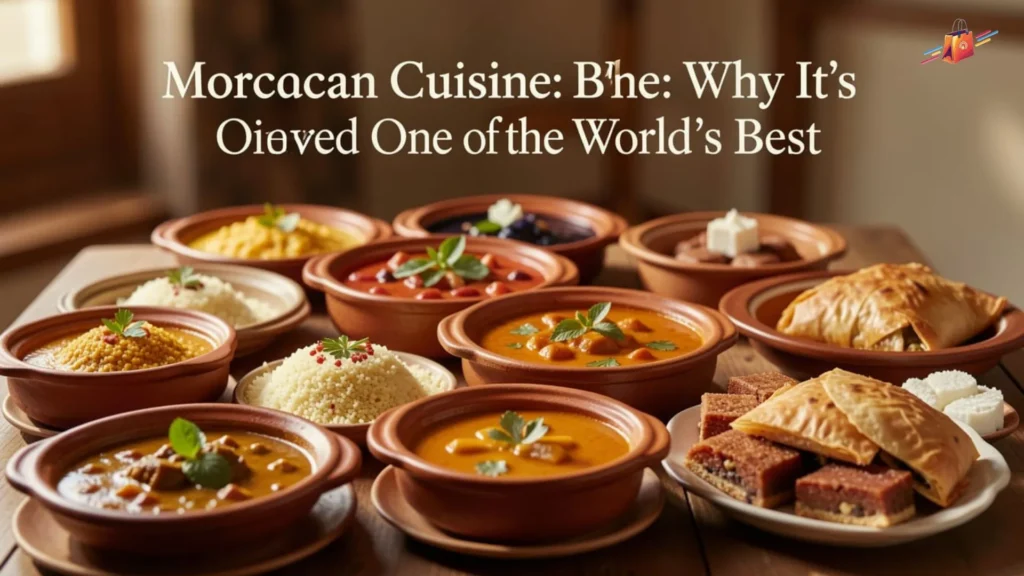
Moroccan cuisine appeals to modern diners because it naturally fits many contemporary preferences:
- Fresh ingredients
- Vegetable-rich meals
- Slow cooking
- Minimal processed food
- Diverse vegetarian options
- Bold but balanced flavors
Restaurants around the world increasingly feature tagines, couscous, and Moroccan-inspired dishes, introducing new audiences to this culinary tradition.