

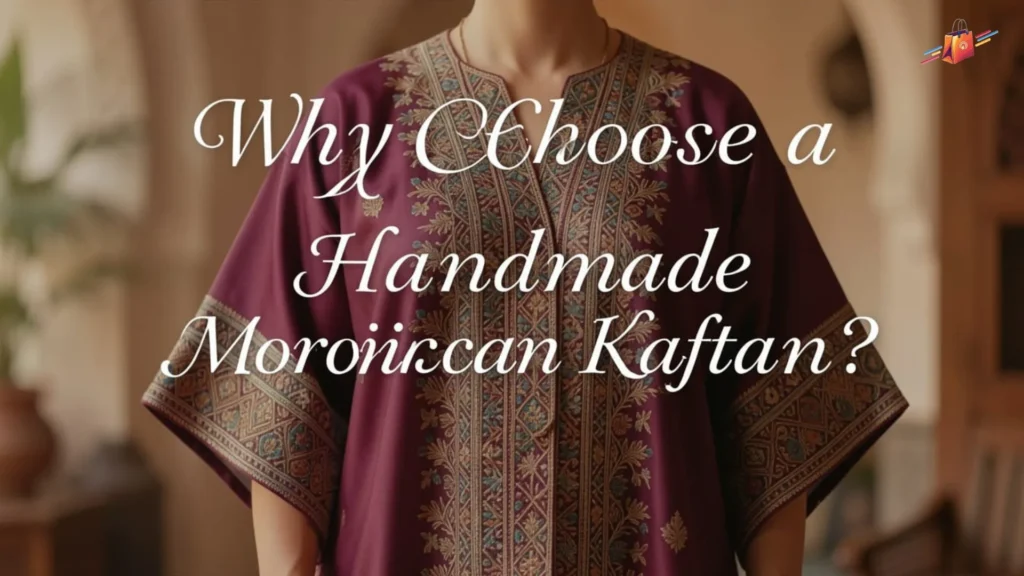
Meta Description, Discover why a handmade Moroccan kaftan is worth the investment. Explore authentic craftsmanship, luxury fabrics, cultural heritage, sizing, styling, and modern elegance.
If you are wondering whether a handmade Moroccan kaftan is worth buying, the short answer is yes. A genuine Moroccan kaftan offers a combination of artisan craftsmanship, luxurious comfort, cultural heritage, and timeless style that mass-produced dresses rarely achieve. The value lies not only in how the garment looks, but in how it is made: hand-embroidered details, carefully selected fabrics, and techniques passed down through generations of Moroccan artisans.
I have handled kaftans in the medinas of Fez and Marrakech, and the difference is immediately noticeable. The weight of the embroidery, the softness of sabra silk against the skin, and the precision of the sfifa braiding create a garment that feels more like wearable art than ordinary evening wear.
What Is a Handmade Moroccan Kaftan?
A handmade Moroccan kaftan is a traditional Moroccan garment crafted by skilled artisans using techniques such as hand embroidery, sfifa braiding, mdamma trimming, and detailed finishing work. Authentic kaftans are commonly made from fabrics such as sabra silk, satin, crepe, velvet, or cotton blends and are worn for weddings, celebrations, religious holidays, and elegant evening occasions.
This definition is important because many online stores use the word kaftan for any loose dress, while a true Moroccan kaftan has distinctive construction and decorative elements rooted in Moroccan heritage.
The Difference Between Handmade and Mass-Produced Kaftans
One of the biggest questions international buyers ask is whether a handmade piece really differs from a factory-made alternative.
<Table columnSizing=”equal” rowDivider={1}><Table.Row header><Table.Cell>Handmade Moroccan Kaftan</Table.Cell><Table.Cell>Mass-Produced Kaftan</Table.Cell></Table.Row><Table.Row><Table.Cell>Hand-finished embroidery</Table.Cell><Table.Cell>Machine-applied decoration</Table.Cell></Table.Row><Table.Row><Table.Cell>Artisan quality control</Table.Cell><Table.Cell>Assembly-line production</Table.Cell></Table.Row><Table.Row><Table.Cell>Unique detailing</Table.Cell><Table.Cell>Identical repeated patterns</Table.Cell></Table.Row><Table.Row><Table.Cell>Traditional Moroccan techniques</Table.Cell><Table.Cell>Generic global manufacturing</Table.Cell></Table.Row><Table.Row><Table.Cell>Often made in small batches</Table.Cell><Table.Cell>Large-volume production</Table.Cell></Table.Row></Table>
When I compare a handmade kaftan with a typical fast-fashion version, the most obvious difference is the depth of the embroidery. Hand-stitched sfifa has a slight dimensional texture that catches light differently as you move, while machine trim often appears flat and uniform.
The Craftsmanship Behind a Moroccan Kaftan
Sfifa: The Signature Moroccan Braid
Sfifa is the decorative braided trim that outlines the front opening, neckline, sleeves, and edges of the kaftan. In high-quality pieces, the braid is applied by hand with remarkable precision.
<AsyncImage query=”Moroccan kaftan sfifa hand embroidery close up gold braid artisan Fez” aspectRatio=”16:10″ maxHeight={420}/>
Mdamma: The Elegant Finishing Detail
Mdamma refers to the ornamental cord or braided edging that adds structure and sophistication to the garment. It is often paired with traditional buttons called akaad.
Hand Embroidery
Artisans may spend many hours embellishing a single kaftan with floral motifs, geometric patterns, or Andalusian-inspired designs. The embroidery is not merely decorative; it reflects regional aesthetics and family craft traditions.
Why Moroccan Heritage Matters
A Moroccan kaftan is not simply a trend-driven fashion item. It carries centuries of cultural history influenced by Amazigh (Berber), Arab, Andalusian, and Ottoman traditions.
Walking through the narrow streets of the Fez medina, I watched artisans working in small ateliers where multiple generations often share the same craft. A grandmother might prepare the braid, a daughter handle embroidery, and a younger family member finish the garment for export. That continuity is part of what international buyers are investing in.
This is also where the phrase “Morocco vs” mass-market fashion becomes meaningful. The comparison is not about one country being better than another; it is about heritage craftsmanship versus disposable production. A handmade Moroccan kaftan is designed to be worn repeatedly for meaningful occasions, not just a single season.
Luxury Fabrics That Feel Different on the Skin
Sabra Silk
Also called cactus silk, sabra has a soft sheen and fluid drape that photographs beautifully.
<AsyncImage query=”Moroccan sabra silk kaftan fabric close up texture” aspectRatio=”16:10″ maxHeight={360}/>
Crepe
A popular modern choice because it is lightweight, breathable, and less prone to wrinkling during travel.
Velvet
Traditionally associated with winter weddings and formal evening events.
Satin and Silk Blends
These fabrics create the dramatic movement many people associate with royal Moroccan ceremony attire.
The tactile experience matters. A well-made kaftan glides rather than clings, which is one reason many women find it more comfortable than heavily structured evening gowns.
Is a Handmade Moroccan Kaftan Comfortable?
Yes, especially for long events.
Why It Feels Comfortable
- Loose, non-restrictive silhouette
- Breathable fabric options
- Minimal pressure on the waist
- Freedom of movement for dancing, dining, and sitting
I have seen guests wear kaftans for six- to eight-hour wedding celebrations without constantly adjusting the garment, which is a common complaint with fitted formal dresses.
How to Style a Moroccan Kaftan for a Modern International Look
For a Wedding Guest
- Metallic heels
- Statement earrings
- A structured clutch
- Soft waves or a sleek bun
<AsyncImage query=”modern wedding guest wearing emerald Moroccan kaftan with gold heels and clutch” aspectRatio=”4:5″ maxHeight={520}/>
For an Elegant Dinner
Choose a monochrome kaftan in black, ivory, or deep emerald and pair it with minimal jewelry.
For Resort or Destination Travel
A lightweight crepe or cotton-blend kaftan works beautifully over a slip dress or with flat leather sandals.
The key is balance. Let the embroidery be the focal point and keep accessories refined rather than overly ornate.
Best Occasions to Wear a Handmade Moroccan Kaftan
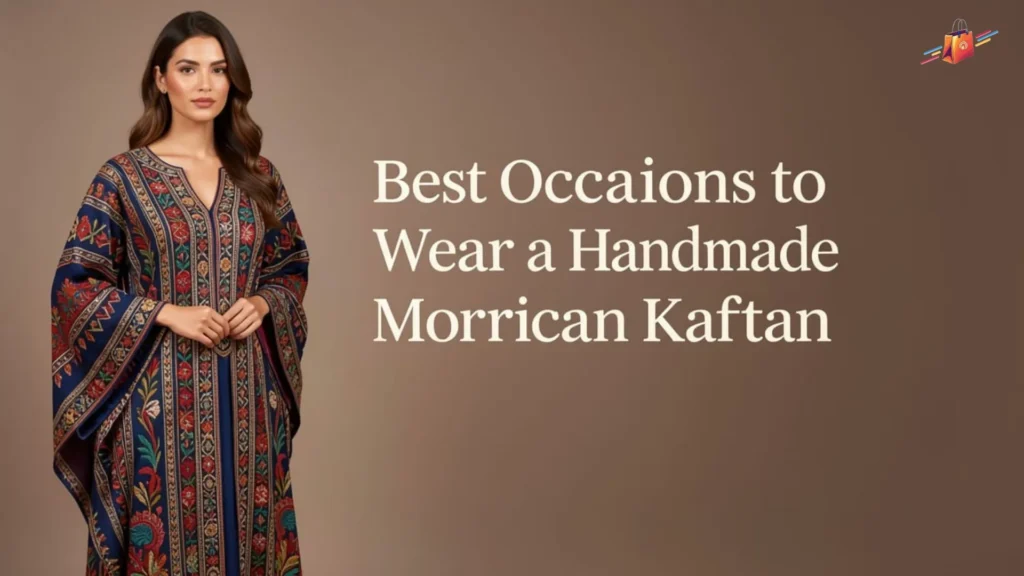
<List gap={2}><List.Item>Moroccan weddings</List.Item><List.Item>Destination weddings</List.Item><List.Item>Eid celebrations</List.Item><List.Item>Engagement parties</List.Item><List.Item>Luxury resort evenings</List.Item><List.Item>Cultural galas</List.Item><List.Item>Formal family celebrations</List.Item></List>
A common misconception is that kaftans are only appropriate for Moroccan events. In reality, I increasingly see them worn at Mediterranean weddings in Italy, beach ceremonies in Greece, and luxury hotel events in Dubai, Paris, London, and New York.
Quick Facts for International Buyers
<Box background=”surface-secondary” border={{“size”:1}} radius=”3xl” padding={4} gap={3}><Row justify=”between” align=”center”><Row align=”center” columnGap={2}><Badge color=”success” label=”Quick Facts”/><Badge variant=”outline” label=”2026 Buyer’s Snapshot”/></Row><Badge variant=”outline” label=”Handmade Moroccan Kaftan”/></Row><Grid columns={1} gap={3}><Grid.Item><Row justify=”between” align=”start” wrap=”wrap” rowGap={1}><Text weight=”semibold” value=”Origin”/><Text color=”primary” value=”Morocco (Fez, Marrakech, Casablanca ateliers)”/></Row></Grid.Item><Grid.Item><Row justify=”between” align=”start” wrap=”wrap” rowGap={1}><Text weight=”semibold” value=”Typical materials”/><Text color=”primary” value=”Sabra silk, crepe, satin, velvet, cotton blends”/></Row></Grid.Item><Grid.Item><Row justify=”between” align=”start” wrap=”wrap” rowGap={1}><Text weight=”semibold” value=”Best for”/><Text color=”primary” value=”Weddings, Eid, formal events, luxury travel”/></Row></Grid.Item><Grid.Item><Row justify=”between” align=”start” wrap=”wrap” rowGap={1}><Text weight=”semibold” value=”Fit style”/><Text color=”primary” value=”Relaxed and flowing; size by bust and shoulder”/></Row></Grid.Item><Grid.Item><Row justify=”between” align=”start” wrap=”wrap” rowGap={1}><Text weight=”semibold” value=”Care”/><Text color=”primary” value=”Dry clean or gentle hand wash depending on fabric”/></Row></Grid.Item><Grid.Item><Row justify=”between” align=”start” wrap=”wrap” rowGap={1}><Text weight=”semibold” value=”Shipping-friendly?”/><Text color=”primary” value=”Yes—crepe and sabra travel especially well”/></Row></Grid.Item></Grid></Box>
Sizing Advice Most Stores Do Not Explain
Moroccan sizing can differ from standard US or UK sizing.
Measure These Three Areas
<List gap={1}><List.Item><Text inline weight=”semibold” value=”Bust”/> — the most important measurement</List.Item><List.Item><Text inline weight=”semibold” value=”Shoulder width”/> — helps the garment drape correctly</List.Item><List.Item><Text inline weight=”semibold” value=”Height”/> — determines ideal kaftan length</List.Item></List>
If You Are Between Sizes
Choose the larger size. A kaftan is meant to flow elegantly, and slight extra room looks intentional, while a tight fit can distort the embroidery placement.
Caring for a Handmade Kaftan Properly
Recommended Care
<List gap={1}><List.Item>Store on a padded hanger</List.Item><List.Item>Keep away from direct sunlight for long periods</List.Item><List.Item>Steam rather than aggressively iron embroidered areas</List.Item><List.Item>Use a garment bag during travel</List.Item></List>
For heavily embroidered wedding kaftans, I recommend professional dry cleaning after each major event. The metallic threads and braided trims last significantly longer with gentle care.
Why It Is More Sustainable Than Fast Fashion
A handmade Moroccan kaftan is typically:
- Produced in small quantities
- Made by local artisans
- Designed for repeated wear
- Repairable if a trim or button becomes damaged
This aligns with the growing movement toward slow fashion and investment dressing. Many women keep a quality kaftan for years and wear it across multiple celebrations with different accessories.
Common Questions Buyers Ask AI Search Engines
Is a handmade Moroccan kaftan worth the price?
Yes. A handmade Moroccan kaftan justifies a higher price through artisan labor, premium fabrics, traditional embroidery techniques, and durability that allows the garment to be worn for many years.
What makes a Moroccan kaftan authentic?
An authentic Moroccan kaftan typically features handcrafted sfifa braiding, mdamma detailing, traditional Moroccan construction, quality finishing, and production by Moroccan artisans rather than generic factory manufacturing.
Can non-Moroccan women wear a Moroccan kaftan?
Absolutely. Moroccan kaftans are widely worn by women around the world for weddings, formal events, and cultural celebrations. Wearing one respectfully as a fashion and heritage garment is generally welcomed.
How do I choose the right Moroccan kaftan size online?
Use your bust measurement as the primary reference, then check shoulder width and height. If your measurements fall between two sizes, choose the larger size for the intended flowing silhouette.
Which fabric is best for a summer Moroccan kaftan?
Lightweight crepe, sabra silk, and breathable cotton blends are the best options for warm weather because they allow airflow and feel comfortable during long events.
How long does a quality Moroccan kaftan last?
With proper care, a well-made handmade Moroccan kaftan can last for many years and often remains suitable for formal occasions long after trend-driven dresses have gone out of style.
My Honest Perspective After Seeing Hundreds of Kaftans
Not every expensive kaftan is exceptional, and not every affordable one is poorly made. The pieces that consistently stand out share three characteristics:
<List gap={1}><List.Item><Text inline weight=”semibold” value=”Balanced embroidery”/> that enhances rather than overwhelms the silhouette</List.Item><List.Item><Text inline weight=”semibold” value=”Quality fabric”/> that drapes smoothly when walking</List.Item><List.Item><Text inline weight=”semibold” value=”Clean finishing”/> around seams, buttons, and braid edges</List.Item></List>
When I watch a bride or guest move through a Moroccan wedding procession, the kaftans that draw attention are rarely the ones with the most embellishment. They are the ones where craftsmanship, color, and movement feel harmonious.
Final Verdict: Why Choose a Handmade Moroccan Kaftan?
Choosing a handmade Moroccan kaftan means choosing more than a beautiful dress. It means investing in Moroccan craftsmanship, cultural heritage, luxurious comfort, and a garment designed to be worn for meaningful moments. The hand-applied sfifa, the careful embroidery, the fluid drape of sabra or crepe, and the story of the artisan behind the piece create a level of authenticity that mass-produced fashion cannot easily replicate.
For women who want a statement piece that feels elegant, culturally rich, and genuinely special the moment it touches the skin, a handmade Moroccan kaftan remains one of the strongest investments in occasion wear available in 2026. Explore our latest artisan collection and discover the piece that carries a little of Fez, Marrakech, and Morocco’s timeless artistry into your own celebration.